Overcoming Dental Issues with Invisalign – A Journey of Smiles Reclaimed

Treating dental issues with Invisalign starts with knowing which problems clear aligners handle well and which ones need a different plan.
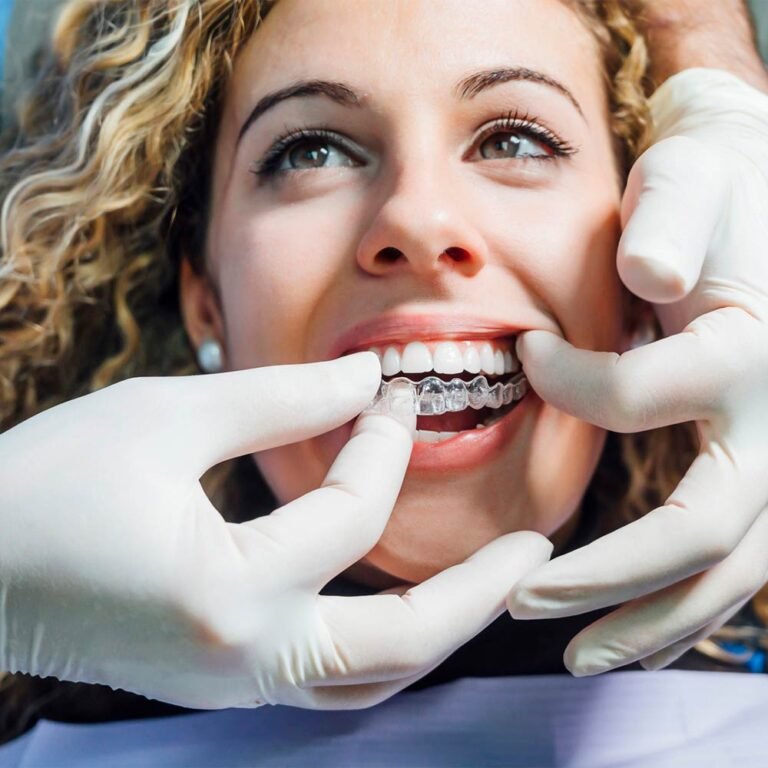
Many people hide their smile because of crooked or gapped teeth. Clear aligners can treat most of the everyday problems we see in Miami Lakes. Here is what Invisalign® can do, problem by problem, and where another approach may be better.
Crowded teeth
Crowding happens when there isn’t enough room for the teeth to line up. Aligners can create space and straighten the teeth, and straighter teeth are easier to brush and floss.
Gaps between teeth
Spaces can be closed with aligners. If a gap is due to a missing tooth, we’ll plan how to fill it — see whether you can combine Invisalign with implants.
Overbite, underbite and crossbite
Many bite problems can be treated with aligners, sometimes with small tooth-colored attachments or elastics to help the teeth move. Severe skeletal problems may need braces or a referral to an orthodontic specialist; we’ll tell you honestly at your consultation.
What makes treatment work
- Wearing aligners 20–22 hours a day
- Healthy gums before you start — our periodontist can treat gum disease first if needed
- Switching aligners on schedule, not early
- Wearing a retainer after treatment
Is it right for you?
The only way to know is an exam, X-rays and a digital scan. Read will Invisalign work for me? and common Invisalign myths, then book a consultation.
Open bite and relapse after braces
An open bite means the front teeth don’t touch when the back teeth close. Some open bites can be improved with aligners, depending on the cause, and habits such as tongue thrusting may need attention too. If your teeth shifted after braces years ago because a retainer wasn’t worn, aligners are often a good fit for bringing them back.
Why crooked teeth and bite problems matter for your health
Straightening isn’t only cosmetic. Crowded teeth have tight overlaps where plaque collects, which can make cavities and gum disease harder to prevent. Bite problems can concentrate force on a few teeth, leading to uneven wear or chipped edges over time. Correcting dental issues with Invisalign can make crooked teeth easier to clean and help the teeth meet more evenly.
Which dental issues with Invisalign need extra help?
Some problems need more than aligners. Large differences in jaw size may need surgery combined with orthodontics. Missing teeth need a plan to replace them, such as a dental implant, usually after the teeth are aligned. Worn or broken teeth may need bonding or crowns after straightening. Active gum disease is treated first, because moving teeth in inflamed gums can make bone loss worse.
The American Association of Orthodontists notes that aligners must be worn consistently and in the correct order to work — read their comparison of braces and clear aligners.
What your consultation shows you
- Which of your concerns aligners can treat, and which need another approach
- An estimate of how many aligners your case may take
- Whether attachments or elastics are part of the plan for bite problems
- The total cost before you commit
How long does treatment take?
It depends on how far the teeth need to move. Mild crowding or small gaps can take a few months; many full cases take around 12–18 months. Bite problems often take longer than purely cosmetic cases, because the teeth have to move into a new relationship with the opposite arch.
Will the results last?
They last when you wear a retainer. Teeth tend to drift back toward their old positions, especially in the first months after treatment, so a nightly retainer is part of every plan. Read do you have to wear a retainer forever after Invisalign?
At All Dental Group, an Invisalign® case is $4,695 all-inclusive — consultation, X-rays, photos, digital scan, every aligner (including any extra ones), all visits, one set of retainers and a take-home whitening kit — or $3,999 paid in full. See payment options or book a free Invisalign consultation.