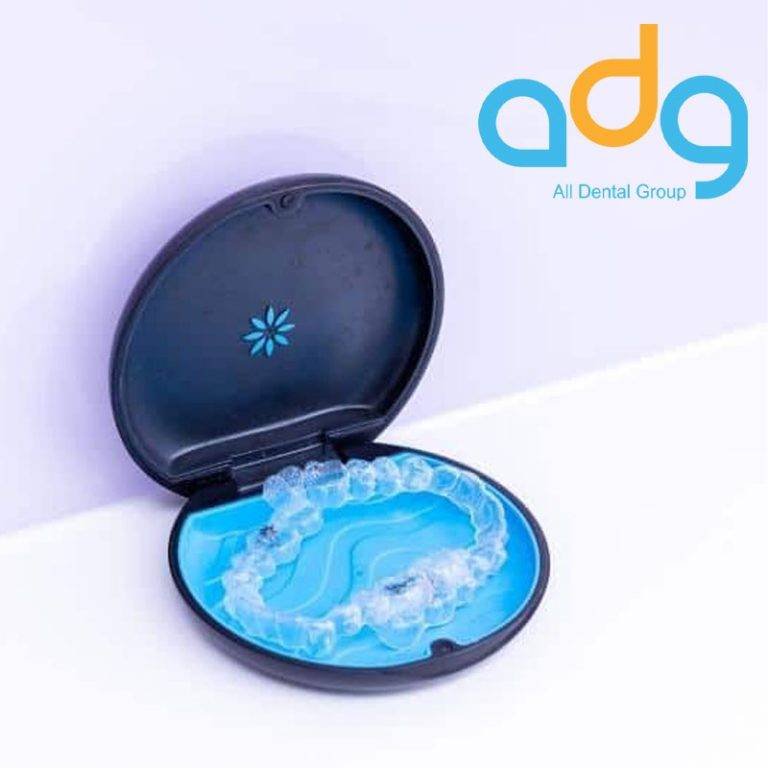
When Will You Feel the Most Discomfort with Invisalign?

Discomfort with Invisalign is one of the first things new aligner patients ask us about, and it is usually milder and shorter than people expect.
Short answer: most people feel the most discomfort in the first two or three days after switching to a new set of aligners, and during the very first week of treatment. It usually feels like pressure or a dull ache, not sharp pain, and it fades as the teeth settle into the new aligner.
Why a new aligner feels tight
Each Invisalign® aligner is shaped slightly differently from your teeth. That small difference applies gentle, steady pressure, and the tissue around each root remodels so the tooth can move. The pressure is strongest when the aligner is new, which is why the first days of each set are the ones you notice.
When it is most noticeable
- The first week of treatment, while you get used to wearing aligners all day.
- The first 1–3 days of each new set.
- After attachments are bonded, or after a refinement set.
- After leaving aligners out for a long stretch — see what happens if you leave Invisalign out for a day.
What helps
- Switch to the next aligner at bedtime so you sleep through the tightest hours.
- Keep wearing them 20–22 hours a day; taking them out often makes each return more uncomfortable.
- Choose soft foods for a day or two, and cold water or ice cream can soothe sore gums.
- Over-the-counter pain relievers can help if they are safe for you — follow the label.
- Orthodontic wax covers a rough edge until we can smooth it.
When to call us
Pressure that fades in a few days is expected. Call (305) 512-0066 if a tooth hurts sharply, pain lasts more than a week, an aligner cuts your gum or tongue, or an aligner no longer fits. Don’t skip ahead to the next set to “fix” it — changing trays too soon usually makes things worse. If it’s after hours and you have swelling or severe pain, see our emergency dentist page.
How long does discomfort with Invisalign last?
For most patients, the soreness of each new aligner is strongest on day one and fades over the next two or three days. By the end of the first couple of weeks of treatment, many people barely notice the change to a new set. If your aligners are changed every one to two weeks, expect a short window of pressure at the start of each set, then days when the aligner simply feels snug.
Invisalign discomfort that gets worse instead of better, or that centers on one tooth, is not the usual pattern. That is worth a call, because it can mean an aligner isn’t seated, an edge is rubbing, or a tooth needs a closer look.
Is aligner discomfort a sign it’s working?
Pressure means the aligner is applying force, and that is how teeth move. But more pain does not mean faster results. Teeth move at a biological pace, which is why your plan sets the number of days for each aligner. Sore teeth that settle in a few days are expected; sharp pain is not.
Invisalign discomfort compared with braces
Both braces and aligners cause pressure when teeth start to move. With braces, soreness often follows each wire adjustment, and brackets can rub the cheeks. With aligners, the pressure comes with each new set, and the smooth plastic has no wires to poke. Many patients find aligner discomfort easier to manage, but everyone is different. Read how Invisalign compares with metal braces.
Tips for your first week
- Start your first aligners on an evening when you can relax at home.
- Practice taking aligners in and out with clean hands, starting from the back teeth when you remove them.
- Expect your speech to sound slightly different for a day or two while your tongue adjusts.
- Write down questions for your first checkup, including any sore teeth that don’t settle.
For guidance on wearing aligners consistently, see the American Association of Orthodontists’ comparison of braces and clear aligners. Your own schedule comes from your dentist, so ask us before changing anything.
At All Dental Group, an Invisalign® case is $4,695 all-inclusive — consultation, X-rays, photos, digital scan, every aligner (including any extra ones), all visits, one set of retainers and a take-home whitening kit — or $3,999 paid in full. See payment options or book a free Invisalign consultation.