
Can you do Invisalign with implants?
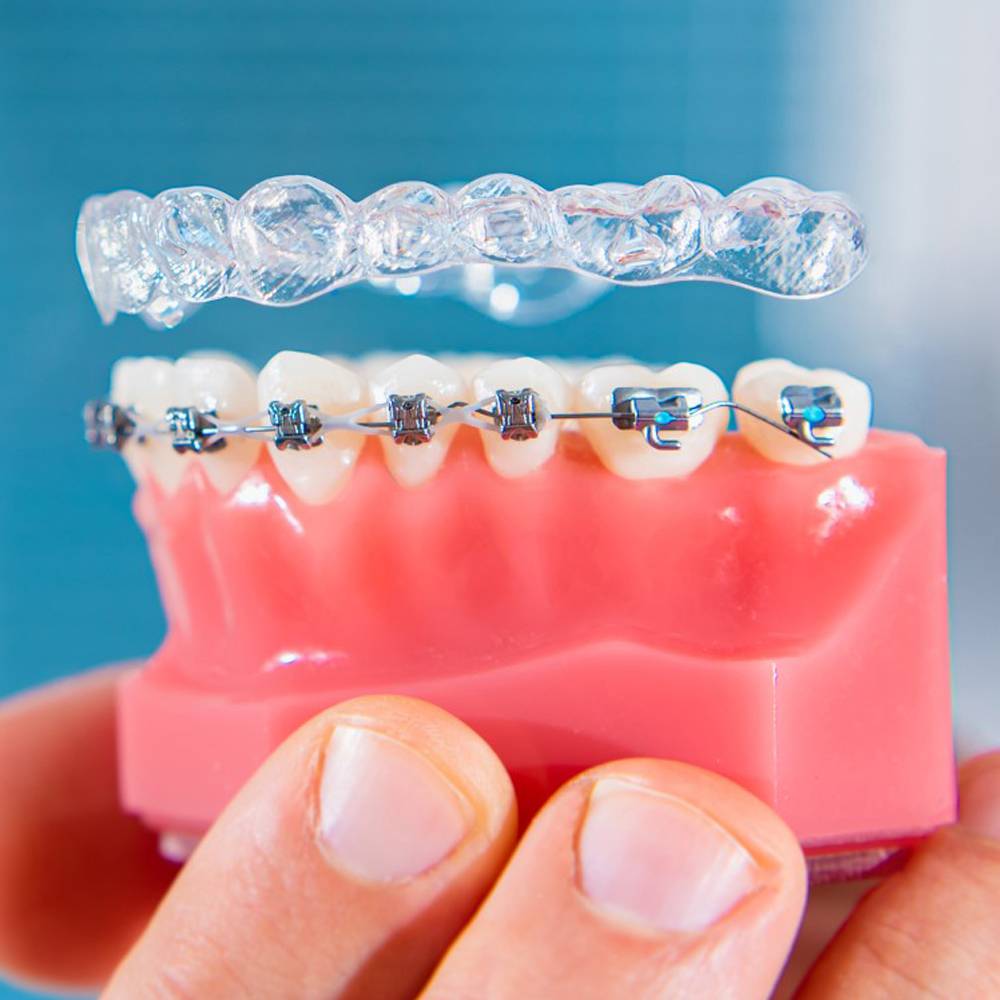
Can you do Invisalign with implants? Patients ask us this when they already have an implant, or when they are missing a tooth and also want straighter teeth.
Short answer: yes, often. A dental implant is fused to the jawbone, so it won’t move with aligners — but the teeth around it can. The key is planning the order of treatment.
If you already have an implant
We plan the aligner movements around the implant. Because it stays put, it can even act as an anchor for moving other teeth. Some movements may be limited, which is why a scan and X-rays come first. See dental implants for how implants work.
If you are missing a tooth now
It is often best to straighten first and place the implant afterwards. Aligners can create the right amount of space and angle, then the implant goes in the ideal spot. During treatment a small tooth-colored “pontic” can fill the gap in the aligner for appearance.
Other combinations
- Bridges: a fixed bridge joins teeth together, so it can limit movement; we’ll plan around it.
- Crowns and veneers: aligners can usually be worn over them; attachments may bond differently.
- Gum health: implants and teeth need healthy gums. Our board-certified periodontist treats gum disease and places implants in the office.
Next step
Bring any implant records you have. Meet our doctors, read will Invisalign work for me? and request a consultation.
Why implants don’t move like natural teeth
A natural tooth sits in its socket on a thin ligament, and that ligament is what lets the bone remodel so the tooth can move. A dental implant has no ligament. During healing, the jawbone fuses directly to the implant, a process called osseointegration — Cleveland Clinic explains the steps. Once that happens, aligners can’t move the implant.
That’s why planning Invisalign with implants is really about the teeth around the implant: where they need to go, and whether the implant is already in the right spot.
Can you do Invisalign with implants already in place?
- Teeth next to the implant can still be moved, tipped or rotated.
- The implant crown keeps its position, so the plan is built around it.
- If an implant sits in a poor position, the implant crown may need to be remade after treatment. We’ll tell you before you start.
- Attachments may be placed on nearby natural teeth instead of the implant.
Timing a new implant with aligners
If you’re missing a tooth, straightening first usually gives the best result. Aligners can open or close space and line up the neighboring roots, so the dental implant can go in at the right angle. Once the teeth are in place, the implant is placed and allowed to heal, and a retainer keeps the teeth from drifting back.
One office for the whole plan
Implants and natural teeth both depend on healthy gums and bone. Because our periodontist and general dentists work in the same office, the timing of gum care, implant surgery and Invisalign with implants can be planned together, with one set of records.
Questions to ask before you start
- Is my implant in a position that fits the final plan?
- Will any crowns or bridges need to be replaced after treatment?
- Should a missing tooth be replaced before or after aligners?
- How will the gap look while I’m wearing aligners?
Bring any X-rays or records from the dentist who placed your implant. They help us plan the movement around it and avoid surprises later.
Every implant case is a little different, which is why we review X-rays, the implant position and your gum health together before we promise a result. You’ll know what aligners can and can’t change before you start.
At All Dental Group, an Invisalign® case is $4,695 all-inclusive — consultation, X-rays, photos, digital scan, every aligner (including any extra ones), all visits, one set of retainers and a take-home whitening kit — or $3,999 paid in full. See payment options or book a free Invisalign consultation.