How Invisalign attachments work

Invisalign attachments surprise many first-time patients, so here is what they are, why your plan may include them and what to expect.
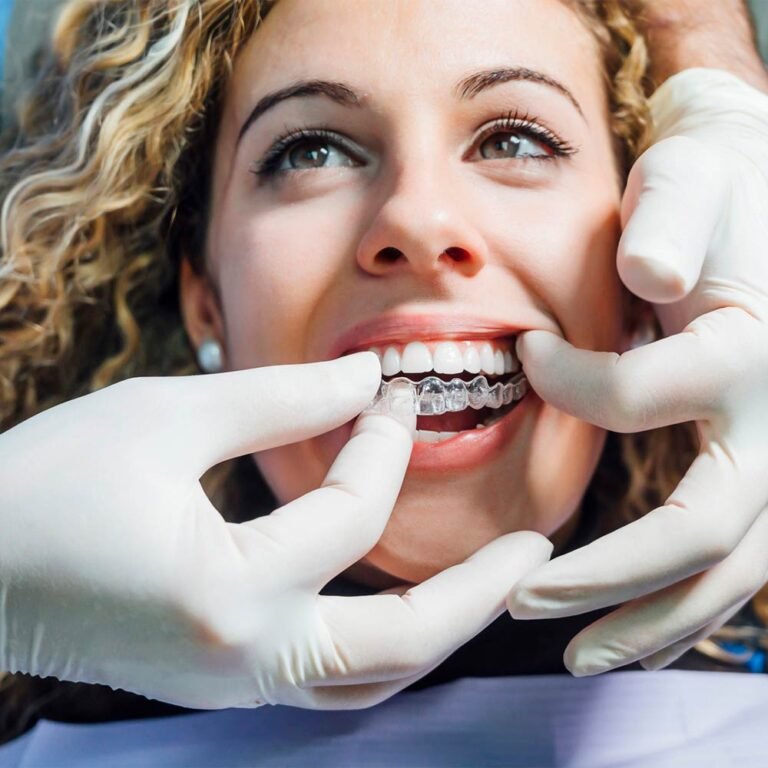
Short answer: attachments are small, tooth-colored bumps of composite (the same material used for white fillings) bonded to certain teeth. They give the aligner something to push against so it can rotate, tip or move teeth up and down more precisely.
Why some teeth need them
A smooth tooth is hard for plastic to grip. Each attachment is shaped for the movement that tooth needs. Not every Invisalign® patient needs them, and usually only some teeth get them.
How they are placed
- The tooth is cleaned and lightly prepared — no drilling or numbing.
- A template aligner shapes the composite in exactly the right spot.
- A curing light hardens it. The visit is usually quick.
What they feel like
Your tongue will notice small bumps for a few days, and aligners feel snugger. Pressure is normal — see when discomfort peaks.
Care and removal
- Brush around them carefully; they can collect plaque.
- Limit coffee, tea and red wine; composite can stain. A whitening kit is included in our all-inclusive case.
- At the end of treatment they are polished off without harming the enamel.
Related: Invisalign vs braces · will Invisalign work for me?
Do Invisalign attachments hurt?
Placing them doesn’t hurt; there’s no drilling or numbing. The first aligner over new attachments fits more tightly, so expect some pressure for a day or two. If a bump feels sharp against your lip, let us know and we can smooth it.
Are they visible?
They’re matched to your tooth color, so most people won’t notice them in conversation. They can be easier to see up close, or if they pick up stains from coffee, tea or red wine. Brushing after meals helps keep them looking clean.
What if one falls off?
It happens occasionally. Keep wearing your aligner and call us. We can usually rebond it at your next visit, or sooner if the aligner stops fitting well. Don’t try to glue anything at home.
Elastics, buttons and other aids
Some plans also use small elastics hooked to buttons or to cutouts in the aligner to help correct the bite. Your plan shows exactly which teeth get an attachment and whether elastics are needed. For more on how aligners work, see the American Association of Orthodontists’ comparison of braces and clear aligners.
Which teeth usually get attachments?
It depends on the movement each tooth needs. Teeth that need rotating, such as rounded canines and premolars, and teeth that need to move up or down are common spots. Your treatment plan shows the exact teeth.
Eating and drinking
Because aligners come out for meals, you can eat normally. Very hard or sticky foods can occasionally knock an attachment off, so take care with things like hard candy. Brush or rinse before putting your aligners back in.
Questions about Invisalign attachments
Will I have them the whole time? Usually, until the movement they help with is done. Some may be added or replaced partway through treatment.
Can I choose not to have them? If your plan needs them, skipping them can make some teeth move less predictably. We’ll explain why each one is there.
Cleaning around attachments
Brush along the gumline and around each bump with a soft brush, and floss as usual; attachments don’t block floss. Clean your aligners at the same time, because plaque trapped inside an aligner sits against the attachments all day.
At All Dental Group, an Invisalign® case is $4,695 all-inclusive — consultation, X-rays, photos, digital scan, every aligner (including any extra ones), all visits, one set of retainers and a take-home whitening kit — or $3,999 paid in full. See payment options or book a free Invisalign consultation.