Why Invisalign is better than braces

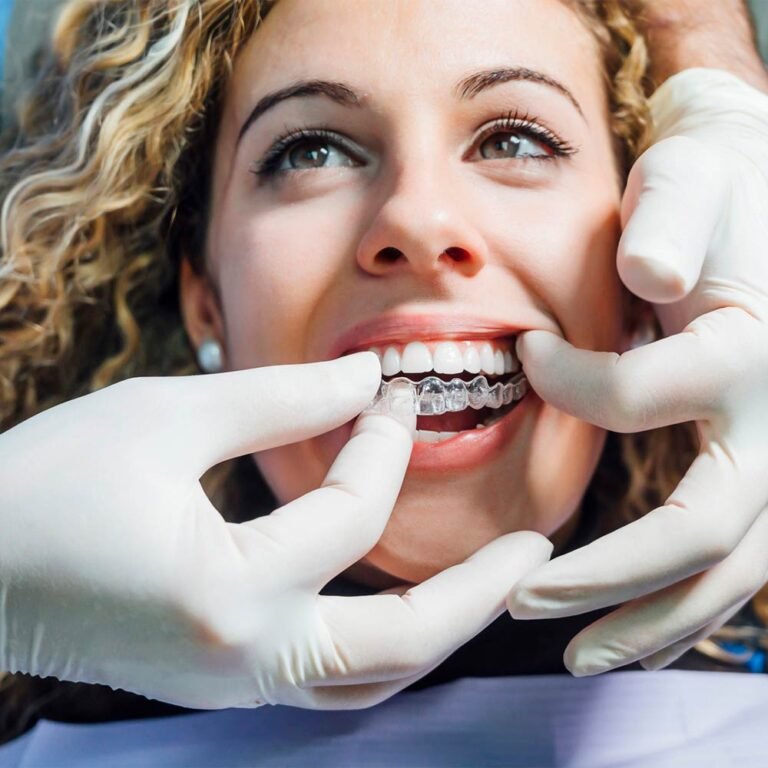
Is Invisalign better than braces? For many patients it is, for reasons that have more to do with daily life than with the final result.
Both clear aligners and braces straighten teeth well. Invisalign® is the better choice for many adults and teens because of how it fits daily life — but not for everyone. Here is an honest comparison.
Where Invisalign wins
- Appearance: clear aligners are hard to notice.
- Eating: you take them out, so no food restrictions.
- Cleaning: you brush and floss normally.
- Comfort: no brackets or wires rubbing the cheeks, and fewer emergency visits for broken parts.
- Planning: you see the planned movement before you start.
Where braces may be better
- When someone won’t wear removable aligners 20–22 hours a day
- Some complex rotations and vertical movements
- Severe bite problems that need specialist care
Time and cost
Treatment length depends on the case more than the appliance. Cost is often in a similar range. Our all-inclusive Invisalign case is $4,695, with financing and in-office plans.
Find out which fits you
Read more Invisalign vs metal braces and common myths, then book a free consultation.
When Invisalign is better than braces day to day
Think about your next year: meetings, photos, sports, travel and family events. Clear aligners come out for meals and special moments, so there’s no food list and no brackets in photos. You brush and floss normally, which helps keep gums healthy while teeth move. With no wires to break, there are fewer unplanned repair visits.
Invisalign vs braces: results
The final result depends more on the plan, the case and how well it’s followed than on the appliance. The American Association of Orthodontists notes that braces can treat most orthodontic problems, while clear aligners work for many cases when worn as directed. That’s why an exam comes before any recommendation.
How to choose
- Choose clear aligners if you want them removable and discreet, and you’ll wear them 20–22 hours a day.
- Choose braces if you’d rather not manage wear time, or if your case needs them.
- Ask what’s included in the price: aligners, refinements, visits and retainers.
Whichever you choose, you’ll need a retainer afterward. Read do you have to wear a retainer forever after Invisalign?
Our all-inclusive Invisalign case is $4,695, or $3,999 paid in full, and includes every aligner, all visits, one set of retainers and a take-home whitening kit. See payment options.
Clear aligners for teens
Teens can do well with clear aligners if they’re ready to wear them consistently. Aligners for teens can include wear indicators, and there are no brackets to break during sports.
Comfort and emergencies
Both cause pressure as teeth move. With braces, a broken bracket or poking wire can mean an extra visit. With clear aligners, a lost or cracked aligner is the most common issue; keep your previous set as a back-up and call us. Read when Invisalign discomfort peaks for comfort tips.
Questions to ask any provider
- Who plans and monitors my treatment?
- How many checkups are included?
- What happens if I need extra aligners or adjustments?
- Is a retainer included, and what does a replacement cost?
The bottom line
If you want a discreet, removable option and will wear it as directed, Invisalign is better than braces for many people. If you’d rather have an appliance that works without your daily involvement, braces are a solid choice. Either way, the right plan starts with an exam.
What to expect at your first visit
We check your teeth and gums, take X-rays, photos and a digital scan, and show you the planned movement on screen. You’ll leave knowing whether aligners or braces suit your case, how long treatment may take and the full price.