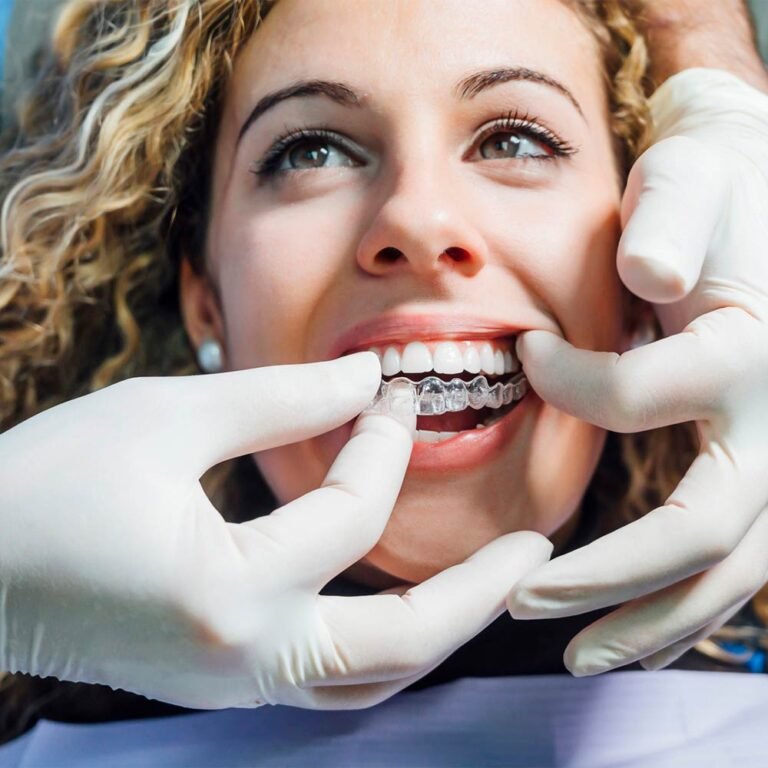
Will Invisalign work for me?

Will Invisalign work for me? The honest answer depends on your teeth, your gums and your habits, and a short exam usually settles it.
Invisalign® works for most adults and teens with crowding, gaps and many bite problems — if the gums are healthy and the aligners are worn as prescribed. Here is how to tell if it fits you.
Good candidates usually have
- Crowded or crooked teeth
- Gaps between teeth
- Overbite, underbite, crossbite or open bite (many cases)
- Healthy gums and no untreated cavities
- The commitment to wear aligners 20–22 hours a day
When another option may be better
- Severe jaw-size differences that may need surgery
- Some large rotations or vertical movements
- Difficulty wearing aligners consistently
How long does it take?
It depends on the case. Simple cases can take a few months; many full cases take around 12–18 months. Your plan shows the number of aligners before you start.
What happens at your consultation
- Exam and X-rays
- Photos and a digital scan
- A preview of the planned movement
- A clear price — no surprises
If cavities or gum disease need treatment first, we take care of it here. New patients can also start with our $119 exam, X-rays and cleaning.
Read seven Invisalign myths and can I treat top teeth only?
Will Invisalign work for me if I had braces before?
Often, yes. Teeth that shifted after braces, usually because a retainer wasn’t worn, are a common reason adults choose aligners. Mild relapse in the front teeth can sometimes be corrected with a short series of aligners.
Are teens good candidates?
Teens can be good candidates if they’re ready to wear aligners as prescribed. Aligners for teens can include wear indicators that help show whether they’re being worn enough.
Questions that decide if you’re a candidate
- How do your teeth meet when you bite?
- Are your gums and bone healthy on X-rays?
- Do you have crowns, bridges or implants that affect the plan?
- Will you wear aligners 20–22 hours a day and switch them on schedule?
The last question matters as much as the clinical ones. The American Association of Orthodontists points out that aligners only work when worn consistently and in the right order. If that sounds hard for your routine, braces may be the more reliable choice, and we’ll say so.
Other options if aligners aren’t right
If your bite needs more than aligners can do, we’ll explain the alternatives, including braces or a referral to a specialist. If you also need implants or crowns, we can plan the order of treatment so each step supports the next.
What results to expect
Aligners can give you a straighter, more even smile and teeth that are easier to clean. They don’t change the shape or color of teeth by themselves. If you want that too, whitening, bonding or veneers can be added after straightening, and our all-inclusive case includes a take-home whitening kit.
Common questions
Can I get Invisalign with fillings or crowns? Usually, yes. Aligners fit over most fillings and crowns, though attachments may bond differently to porcelain.
Can I get Invisalign if I have gum disease? Not until it’s treated. Moving teeth in inflamed gums can worsen bone loss, so our periodontist treats it first.
Am I too old? No. Healthy teeth can move at any age, and many people who choose aligners are adults.
How to prepare for your consultation
Bring a list of your medications, any recent X-rays from another office and photos of your smile if your teeth have shifted over time. Think about what bothers you most, whether it’s a gap, crowding or how your teeth bite. Clear goals help us show you a plan that fits.
At All Dental Group, our dental office in Miami Lakes, an Invisalign® case is $4,695 all-inclusive — consultation, X-rays, photos, digital scan, every aligner (including any extra ones), all visits, one set of retainers and a take-home whitening kit — or $3,999 paid in full. See payment options or book a free Invisalign consultation.